
Route 66 Centennial: How to Celebrate 100 Years on the Mother Road in 2026
Explore the rich history of Route 66 as it celebrates 100 years. Discover its impact on American culture and travel. Read more to embark on this journey.

On November 11, 1926, a stretch of highway was born that would change the way America moved, dreamed, and defined freedom. Now, a full century later, the Route 66 centennial is here-and it might be the greatest excuse to hit the open road that any of us will ever get.
Disclosure: Journey Fanatics earns from purchases, no extra cost to you!
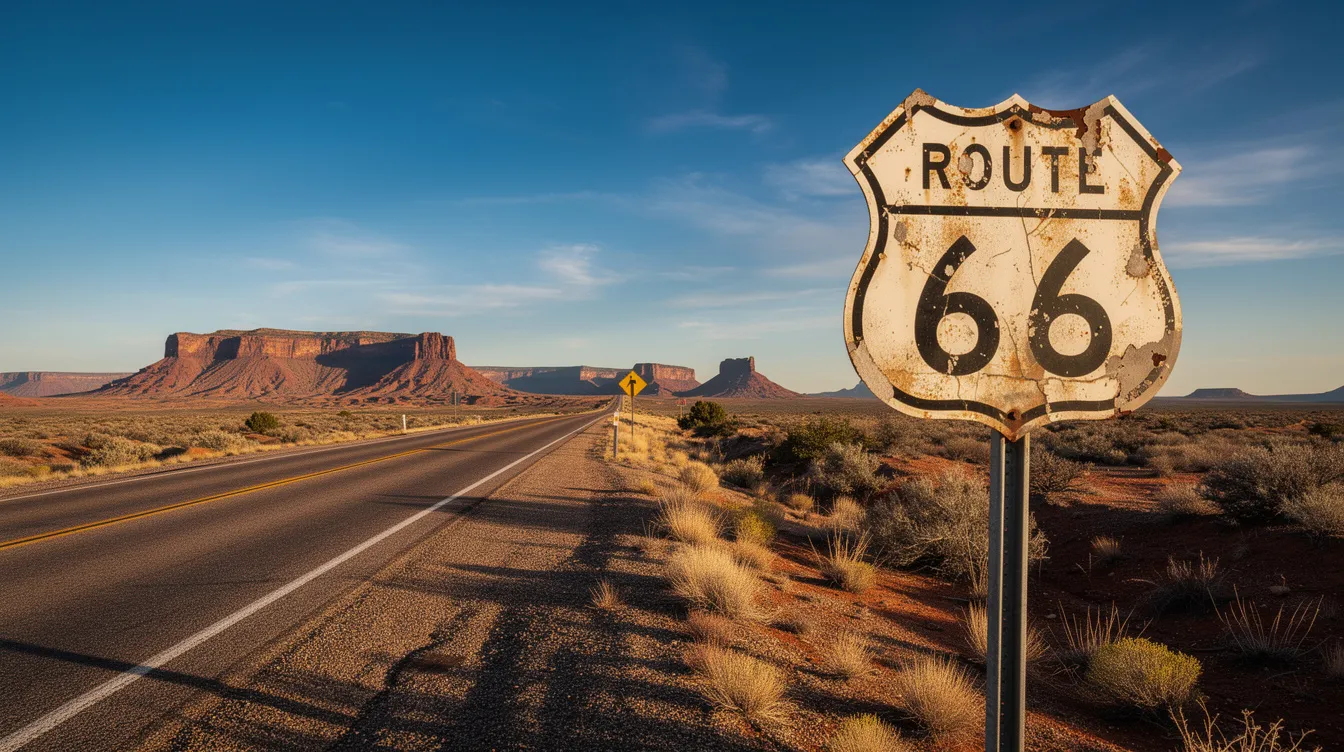
Why the Route 66 Centennial Matters (and Why 2026 Is a Big Deal)
Think about it: one road, 2,448 miles, eight states, and a hundred years of legends. When federal officials established U.S. Highway 66 back in 1926, they weren't just drawing a line on a map from Chicago to Santa Monica. They were stitching together the country-connecting small towns across Illinois, Missouri, Kansas, Oklahoma, Texas, New Mexico, Arizona, and California into a single, driveable story. Route 66 is known as the Main Street of America for good reason. It didn't bypass communities. It ran straight through them, and in doing so, it gave life to diners, gas stations, motor courts, and roadside attractions that still define what a classic American road trip feels like.
The Route 66 centennial celebration is, quite honestly, a once-in-a-century opportunity. It's not just for history buffs or classic car collectors-it's for anyone who has ever felt the pull of a highway stretching toward the horizon. Families, solo travelers, couples chasing neon sunsets: this is your moment. And if you've been building a bucket list, there's no better year to check off "drive the Mother Road" than 2026.
Here's what makes this centennial even more remarkable. After the Interstate Highway System began swallowing up Route 66's traffic in the late 1950s and '60s, the old road nearly vanished. Towns were bypassed. Motels shuttered. By 1985, Route 66 was officially decommissioned. But it refused to die. Grassroots preservation groups, state associations, and stubborn dreamers brought it back-restoring neon signs, reopening vintage motels, and turning the route into a living museum of Americana. Today, the road is more alive than it's been in decades, and the centennial is pouring fuel on that fire.
This guide isn't a one-time anniversary article that expires on November 12, 2026. Consider it your evergreen roadmap for planning a Route 66 adventure this year or any year after. The official Route 66 Centennial Commission, created by Public Law 116-256, has been coordinating year-long celebrations across every state on the route. Oklahoma, Texas, New Mexico, Arizona, California-they're all participating with festivals, exhibits, and commemorations that stretch well into 2027. And if you want a head start on the specific attractions worth your time, our companion piece on 5 must-see stops along historic Route 66 is the perfect place to begin.
The Story of the Mother Road: A Brief, Inspiring History of Route 66
Picture a motorist in the late 1920s pulling away from Chicago's Jackson Boulevard, the engine humming, a paper map spread across the passenger seat. Ahead: nothing but possibility. U.S. Highway 66 had just been designated as part of a bold new national road network, and for the first time, a driver could follow a single route from the shores of Lake Michigan all the way to the Pacific Ocean. Much of it was still dirt and gravel in those early years, but the creation of this corridor was already reshaping the country. By 1938, Route 66 became the first U.S. highway to be fully paved, making continuous cross-country travel not just possible but inviting.
The road's history reads like a novel-and in fact, it inspired one. When the Dust Bowl devastated Oklahoma, Kansas, and Texas in the 1930s, Route 66 became the exodus route for hundreds of thousands of families heading west in search of work and hope. John Steinbeck immortalized that migration in The Grapes of Wrath, calling Highway 66 "the Mother Road, the road of flight." The name stuck, and it still shapes how we think about the route a century later. Route 66 has inspired countless stories over the past century, from Steinbeck's prose to Bobby Troup's "(Get Your Kicks on) Route 66" to the television series that carried its name into living rooms across the world.
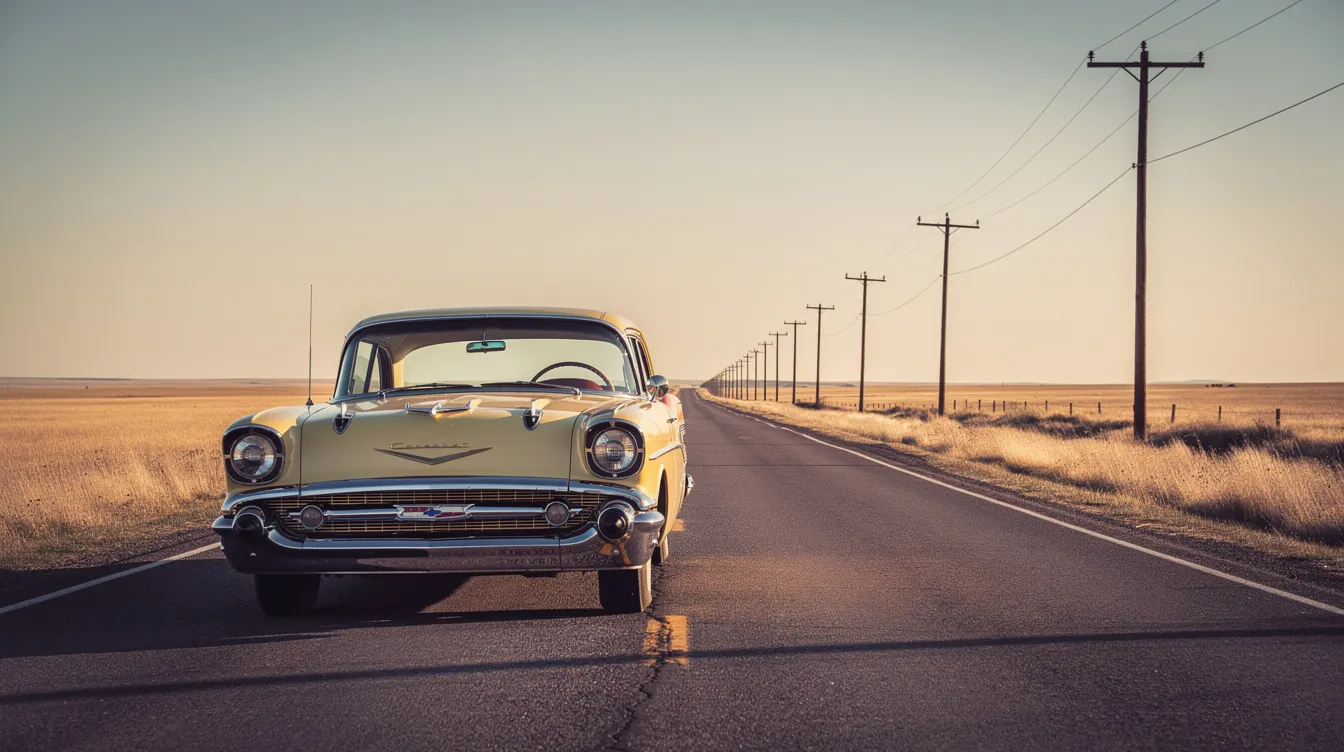
During World War II, the highway moved troops and supplies across the country. Then came the golden age. In the 1950s and '60s, families in finned sedans poured onto the road for summer vacations, discovering roadside America one neon sign at a time-drive-in theaters, wigwam-shaped motels, diners serving pie that tasted like the whole adventure was worth it just for dessert. Main street businesses thrived on passing traffic, and the road's cultural identity deepened with every mile.
But progress has a cost. The Federal-Aid Highway Act of 1956 launched the Interstate Highway System, and one by one, Route 66's small towns were bypassed by faster, wider freeways like I-40, I-44, and I-55. The last original section of Route 66 was bypassed near Williams, Arizona, in October 1984. By 1985, the road was officially decommissioned-erased from federal maps. For a while, it looked like the end.
It wasn't. Starting in the late 1980s and '90s, local Route 66 associations began fighting to preserve what remained. The National Park Service launched a corridor preservation program. Business owners restored vintage signs, repainted murals, and reopened motor courts. Volunteers cataloged historic sites and lobbied for recognition. Route 66 represents hope, courage, and the American spirit-and that spirit, it turns out, is very hard to kill. Today, the road is a pilgrimage for travelers from around the world, and its history is the foundation on which the centennial stands.
Route 66 Centennial Celebration Highlights: Events, Festivals, and Special Experiences
The 66 centennial isn't a single weekend or a single city. It's a patchwork of celebrations happening from Chicago to Santa Monica throughout 2025–2027, with 2026 as the peak year and November 11, 2026, as the official centennial date. If you're wondering what's happening and where, the answer is: almost everything, almost everywhere.
At the national level, the Route 66 Centennial Commission has been coordinating efforts across all eight states. The commission's mission is to promote preservation, tourism, research, and economic development along the corridor. A national kick-off event was anchored in Springfield, Missouri, on April 30, 2026, with satellite celebrations stretching across the route. The U.S. Postal Service released commemorative Route 66 stamps, designed from a photographer's 42 journeys along the highway. And a documentary film celebrates Route 66's centennial, adding yet another chapter to the road's long partnership with American storytelling and cinema.
State by state, the celebrations are rich and varied. Oklahoma-which boasts more drivable miles of historic Route 66 than any other state-has been running a year-long centennial event series, with a special logo designed by artist Shellee Graham. Events in Tulsa have included a Capital Cruise parade, while towns like Weatherford, Elk City, and Clinton have hosted everything from big band dances to museum exhibits. The Oklahoma Route 66 Museum in Clinton, already one of the road's finest cultural attractions, has expanded its collection of centennial programming.
In Texas, Amarillo is a natural anchor point. The Cadillac Ranch and Big Texan Steak Ranch are perennial draws, but centennial-specific events have added classic car shows, live music, and festival-style gatherings to the lineup. June 2026 brought a "Tin Can Tourists Centennial Caravan" rolling through the Texas panhandle, and select hotels along the route have been offering themed packages for travelers.
New Mexico and Arizona are delivering some of the most visually stunning celebrations. Albuquerque has the longest urban stretch of Route 66 at 18 miles, running along Central Avenue through the city's neon corridor, past the historic KiMo Theatre. Albuquerque features 18 miles of Route 66 events during the centennial, and you can even pick up Route 66 kicks in Albuquerque-limited-edition shoes available for purchase as centennial memorabilia. Over in Arizona, Flagstaff features a classic car show during celebrations, turning downtown Flagstaff into a rolling museum of chrome and nostalgia. Heritage Square in Flagstaff hosts live music and events throughout the summer, and there's a wonderful bit of pop-culture history here too: Route 66 inspired a famous Eagles song in nearby Winslow, and that legacy echoes through every festival happening in the area.
Missouri and Illinois round out the eastern end. Springfield, Illinois, has hosted centennial 5K runs (with ultramarathon legend Dean Karnazes), movie premieres, ice cream socials, and symphony concerts. In St. Louis, a week-long festival in late April and early May included bike rides, documentary screenings, and presentations on the road's history. Chicago-hosted commemorations near the eastern terminus marker have given travelers a reason to begin-or end-their journey with a celebration.
Dates and lineups are still evolving. Check official state Route 66 association websites and local visitor bureaus for updated 2026 and 2027 calendars. And remember: you don't need to drive all 2,448 miles to join the fun. A weekend festival in one state can still deliver a full centennial flavor.
Must-See Mother Road Stops: Attractions, Diners, Motels, and Museums
The centennial is the perfect excuse to slow down, roll the windows down, and savor Route 66's classic Americana at a pace that lets you actually taste the food, meet the locals, and discover the roadside weirdness that no interstate can offer. Here's a loose east-to-west tour of the stops that define the road.
Illinois and Missouri set the tone. It all starts at the "Begin Route 66" sign near Adams Street in Chicago, where you can snap the obligatory photo before heading southwest through the Illinois heartland. Pontiac's murals and the Route 66 Hall of Fame are worth a pause, and Joliet's historic route alignments give you an early taste of old-road driving. Cross the Mississippi via the Chain of Rocks Bridge near St. Louis-a pedestrian-only span with a famous bend in the middle-and continue into Missouri, where the Route 66 Car Museum in Springfield holds a gorgeous collection of classic cars from the road's golden age. Don't skip Lou Mitchell's in Chicago before you leave, either. This legendary diner has been feeding travelers since 1923, and the doughnut holes they hand you at the door are reason enough to arrive hungry.
Oklahoma and Texas deliver the roadside spectacle. The Blue Whale of Catoosa, a giant smiling whale sculpture beside a pond, is one of the most photographed spots on the entire route. Pops 66 Soda Ranch near Arcadia is a modern-retro gas station and soda shop with a 66-foot-tall glowing soda bottle out front and over 700 flavors inside. The Oklahoma Route 66 Museum in Clinton tells the full story of the road's rise, decline, and revival with artifacts, oral histories, and multimedia exhibits. Cross into the Texas panhandle and you'll meet Cadillac Ranch-ten Cadillacs buried nose-first in a wheat field, spray-painted by decades of visitors-and the Big Texan Steak Ranch in Amarillo, where the 72-ounce steak challenge has been fueling road-trip legends since 1960.
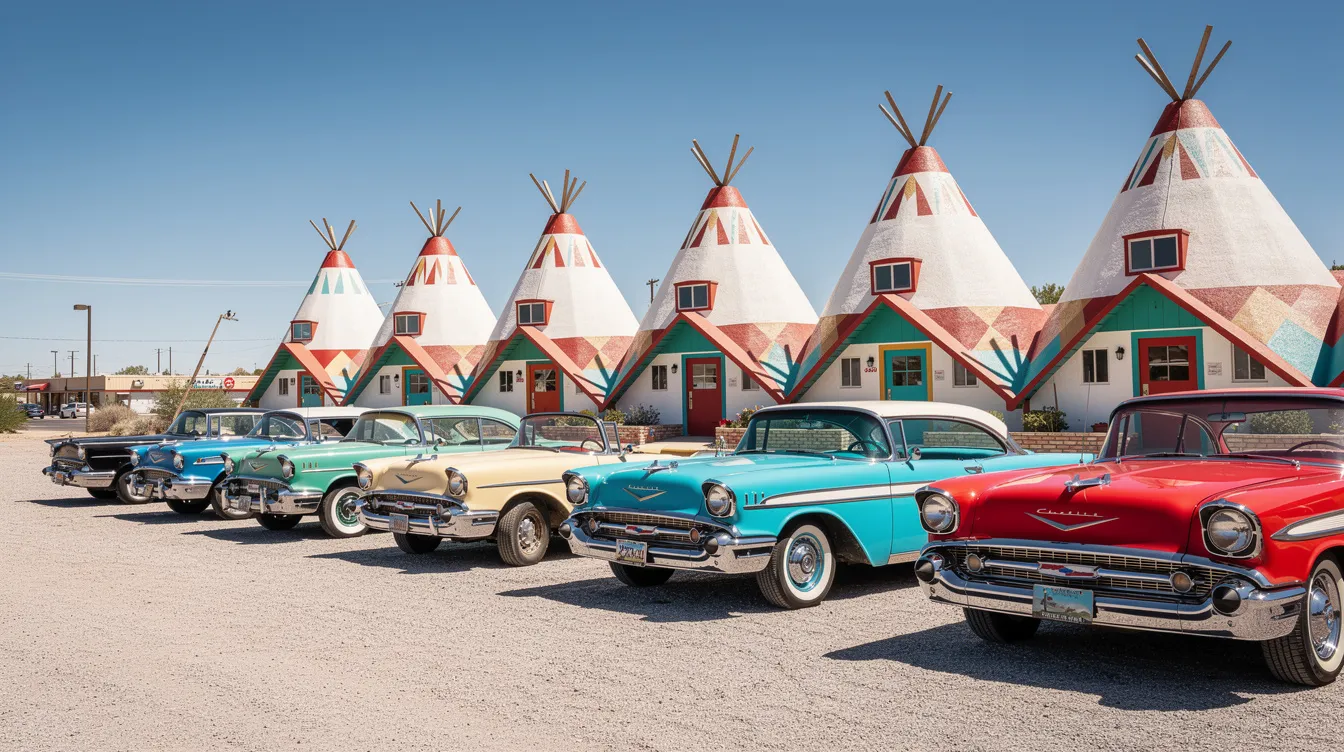
New Mexico and Arizona bring the scenic beauty and the neon. In Santa Rosa, the Route 66 Auto Museum houses a curated collection of vintage vehicles. Albuquerque's Central Avenue corridor-18 miles of historic route-is lined with neon signs, local restaurants, and cultural landmarks like the KiMo Theatre. Further west, Holbrook's Wigwam Motel lets you sleep inside a concrete teepee, and a short detour south takes you to Meteor Crater, a 50,000-year-old impact site that feels like another planet. Standin' on the Corner Park in Winslow is an obligatory stop for Eagles fans, and Seligman's retro streetscape-the town that inspired the movie Cars-is a time capsule of hand-painted signs, vintage memorabilia, and community pride. In Flagstaff, the adventure continues with the scenic beauty of the surrounding Ponderosa pines and the old-town charm of its historic downtown.
California brings you home. Just over the Arizona border, Oatman's wild burros roam the streets of a former gold-mining town. Roy's Motel and Café in Amboy sits alone in the Mojave Desert, its iconic Googie-style sign a beacon for photographers. Vintage motels dot the final stretch through the high desert and into the Los Angeles basin, and the journey ends at the Santa Monica Pier-the western terminus of the Mother Road, where the Pacific Ocean tells you there's nowhere left to drive.
For a deeper dive into the landmark attractions that define this historic route, check out our guide to the 5 must-see stops along historic Route 66. And leave room in your itinerary for the unplanned stops-the hand-lettered sign advertising homemade tamales, the abandoned motel with wildflowers growing through the parking lot, the local shop owner who wants to tell you the story of their town. Those are the moments that make the Mother Road feel alive.
Planning Your Route 66 Centennial Road Trip: Practical Tips, Gear, and FAQs
Here's the good news: you don't need two weeks of vacation and a perfectly restored 1957 Chevy to explore Route 66 during the centennial. You can drive one state in a long weekend, stitch together a 3–5 day segment anchored around a festival, or go all-in on the full coast-to-coast epic. The road meets you where you are.
When to go. Spring (April through June) and fall (September through October) offer the best balance of comfortable temperatures, manageable crowds, and event density. Summer brings the most festivals and the longest days, but desert sections in Texas, New Mexico, and Arizona can be brutally hot. If you prepare for the heat and plan your rest stops wisely, summer is still a great option-just pack plenty of water and a breathable steering wheel cover so your hands don't fuse to the wheel somewhere outside Amarillo.
How to plan the route. Decide your direction first. Chicago to Santa Monica follows the classic westward trajectory-the way the Dust Bowl migrants and the postwar vacationers traveled. Santa Monica to Chicago lets you build toward the grand finale of arriving in the city where it all began. Either way, anchor your stops around major centennial events (the February and june calendars tend to fill up fast in popular towns like Flagstaff and Tulsa). Mix interstate driving with original alignments so you can explore authentic main street towns without burning out on two-lane roads. Paper maps, Route 66 guidebooks, and GPS apps with historic segment overlays all help.
What to pack. A long road trip demands smart packing. Start with our road trip packing list as your master checklist, then customize. Bring a good reading light for motel evenings spent with a Route 66 guidebook. Comfortable shoes are non-negotiable-you'll be walking through museums, climbing on roadside sculptures, and strolling small-town sidewalks more than you expect. Build a themed playlist before you leave: Bobby Troup's "(Get Your Kicks on) Route 66," Woody Guthrie, the Eagles, and anything that sounds like wind through a car window. Download a few Route 66 podcasts or audio tours, and you'll have a soundtrack that makes every mile feel inspired.
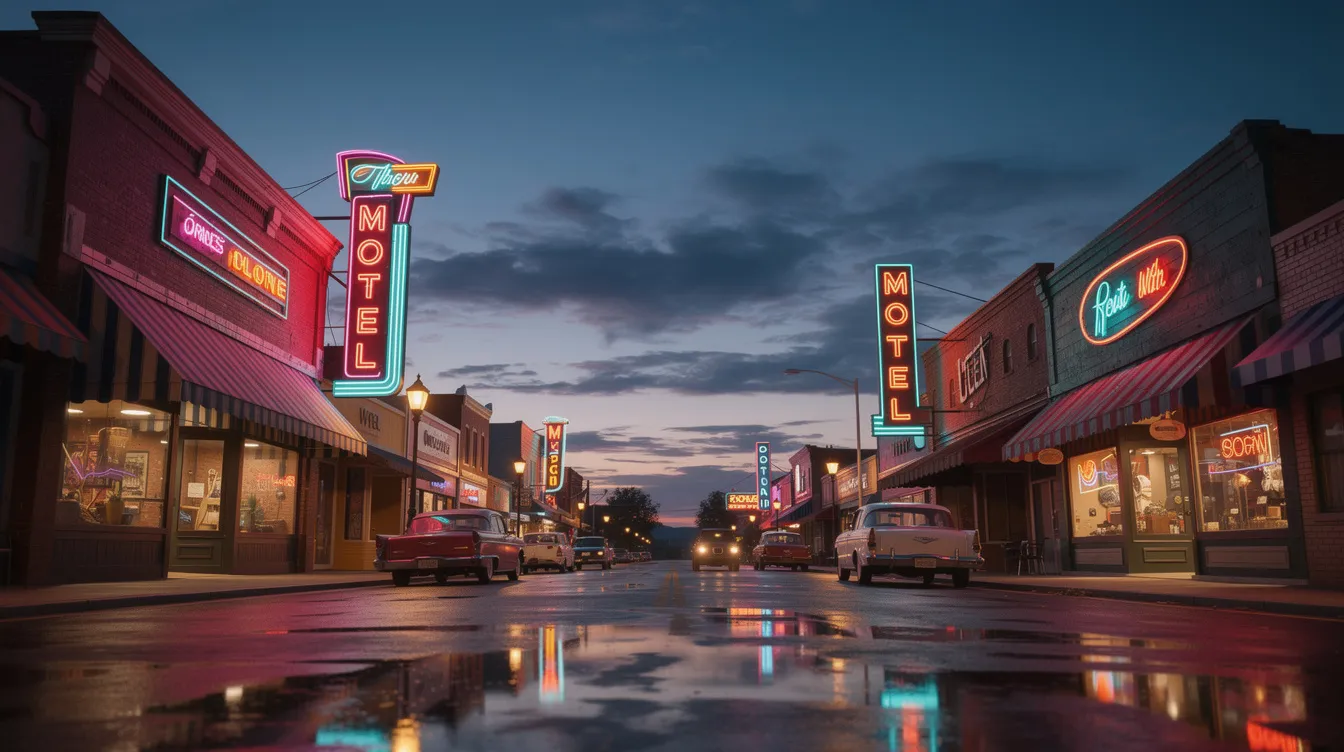
Where to stay. Classic motels along the route offer a style of lodging you simply can't find on the interstate-neon signs flickering to life at dusk, room keys on actual keyrings, the quiet hum of a window AC unit. Many have been lovingly restored and are well-maintained. But book ahead during peak centennial celebration periods, especially in June, early fall, and around the November 11 anniversary. In more remote stretches, modern hotels may be your most reliable option, and that's perfectly fine. The adventure is on the road, not necessarily in the room.
Detours worth taking. Route 66 passes near some of the most stunning landscapes in the country. Petrified Forest National Park and the Painted Desert in Arizona are right off the route. The Grand Canyon is a manageable detour from Flagstaff or Williams. If you're building a broader road trip, our guide to the best national park road trip routes in the U.S. can help you fold in even more scenic beauty.
Frequently Asked Questions
Is Route 66 still driveable in 2026? Yes. Many segments are preserved, signed, and maintained by state Route 66 associations. Some sections have been replaced by interstates, but historic alignments still exist alongside or near the modern highways. You won't drive every original mile, but you can drive the vast majority of the route.
How long does it take to drive the whole Mother Road? Plan for 10–14 days if you want to properly enjoy the stops, the food, and the atmosphere. Shorter itineraries of 3–7 days can cover one or two states comfortably. Don't wait for the "perfect" two-week window-a long weekend on one segment is better than never going at all.
Do I need a special vehicle? No. A regular car handles the route just fine. Some remote desert roads may be rough, but nothing that requires four-wheel drive. Vintage and classic cars add an incredible layer of fun-but they also require mechanical preparation and a willingness to troubleshoot on the fly.
Is Route 66 kid-friendly for families? Absolutely. The road is practically designed for kids: giant roadside sculptures, diners with milkshakes, museums with old cars, the Santa Monica Pier at the finish line. Just pace yourself. Long stretches between services in the desert can test young passengers, so bring snacks, games, and frequent stop plans.
Can I do Route 66 on a budget during the centennial? Yes. Many centennial events and festivals are free. Stay in motels instead of boutique hotels, eat at local diners (the food is better anyway), and travel during shoulder season to avoid premium pricing. Pack a cooler with drinks and snacks for the long stretches, and you'll save more than you'd expect.
Start sketching your centennial itinerary now-even if you only plan to drive one stretch. The road has been waiting a hundred years for this. Don't make it wait any longer.
Keeping the Spirit of the Mother Road Alive After the 66 Centennial
Route 66 has survived decommissioning, decades of neglect, bypassed towns, and every shift in how America travels. The 2026 route 66 centennial celebration isn't just a birthday party-it's a testament to the resilience of the communities, the preservation projects, and the bold, stubborn people who refused to let the road disappear. Celebrating this century means recognizing that every mile of neon-lit highway still standing is a small victory.
Your centennial road trip is part of a longer story. Every motel night booked at a family-run motor court, every breakfast ordered at a local diner, every conversation struck up with a shop owner in a town of 400 people-these aren't just vacation moments. They're acts of preservation. They keep the economy of the Mother Road alive and give the next generation a reason to keep the signs lit and the doors open. Join a Route 66 association in your favorite state. Share your photos and stories. Come back next year and drive a different segment. The road is never the same twice.
Here's the thing about Route 66. It was never really about getting somewhere fast. It was about the life that happened along the way-the food, the faces, the freedom of not knowing exactly what's around the next curve. So whether you find yourself standing at the Santa Monica Pier watching the sun sink into the Pacific, or idling beneath a flickering neon sign in some two-stoplight town in the middle of the country, remember: the best way to honor a hundred years of the Mother Road is to go out and make your own memories on it.
The road is open. The centennial is here. Now go get your kicks.
Happy Travels! 🌍