
How to Make an Airplane Seat More Comfortable (Even in Economy)
Transform your flying experience with expert tips to make airplane seats more comfortable. Discover practical tricks to enhance your journey—read more!

Disclosure: Journey Fanatics earns from purchases, no extra cost to you!
Nobody boards a plane expecting a spa experience, but there's a real difference between "tolerable" and "my entire body hurts." The good news is that a few deliberate choices-before and during your flight-can make even a cramped economy airplane seat feel noticeably better. Here's how to take control of your own comfort without checking an extra bag.
Key Takeaways
- Even a tight airplane seat can feel better when you combine smart seat adjustments, compact support pillows, and small movement breaks throughout the flight.
- Clothing choices matter as much as the plane seat itself. Stretchy layers, slip-on shoes, and compression socks set you up for a more comfortable journey before you even board.
- A small, flexible pillow like the Travel Fanatics Mini Microbead Pillow can support the neck, lower back, shoulder, wrist, or side without eating up carry on space.
- Long flights feel more manageable when you change positions every 30–60 minutes, stay hydrated, and keep light snacks and simple entertainment within reach.
- You can't control legroom, but you can control posture, support, and routine-even in a middle seat.
Why Airplane Seats Feel So Uncomfortable
Modern airplane seats, especially when you fly economy, are designed around safety certification and maximum capacity-not your spine. Airlines have gradually reduced seat pitch (the space between rows) to as little as 28 inches on some carriers, and most economy seats offer only 17–18 inches of width. Research shows that discomfort and seat-pan pressure increase significantly at pitches below 30 inches, with measurable effects kicking in after roughly one hour of sitting.
The seat cushion is typically thin and fixed, so your hips and tailbone absorb more pressure than they should-especially if you're taller, shorter, or broader than the "average" body the seat was built around. Minimal lumbar support means your lower back rounds out, your shoulders hunch forward, and your neck strains to hold your head upright.
Add in dry cabin air, engine noise, vibrations, and glowing screens, and it's no wonder you step off the plane feeling like you aged a decade. The rest of this article covers practical, carry-on-friendly ways to fight back.
Set Yourself Up Before You Board: Clothes, Gear, and Carry-On Strategy
The path to a comfortable airplane seat actually starts at home when you're choosing outfits and packing your bag.
Clothing: Wear comfortable clothing like leggings and a cozy sweater, or soft joggers with a moisture-wicking base layer. Layered clothing can help adjust to fluctuating temperatures in airplane cabins-a light zip-up hoodie works as a blanket or extra padding in a pinch. Avoid stiff jeans or tight waistbands that compress your abdomen on long flights.
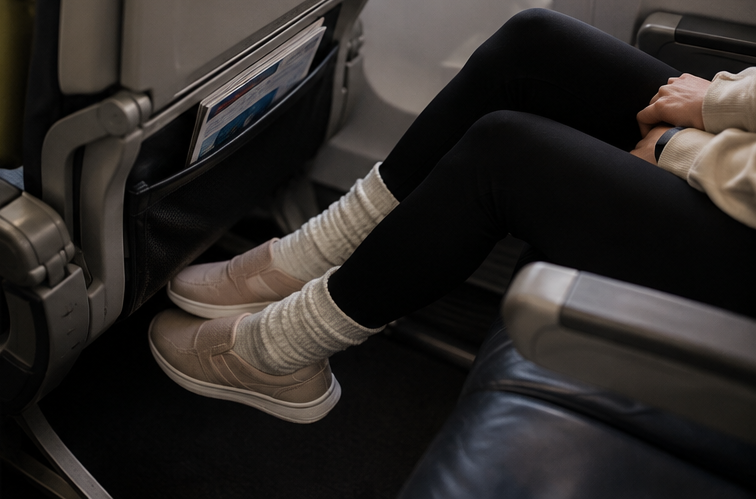
Footwear: Slip-on shoes let you loosen or remove footwear once you're in the air, and a pair of warm socks keeps feet comfortable when the cabin floor gets cold. Compression socks help prevent blood clots during long flights and reduce leg swelling on trips over about six hours. Make sure they're properly sized so they support circulation without pinching.
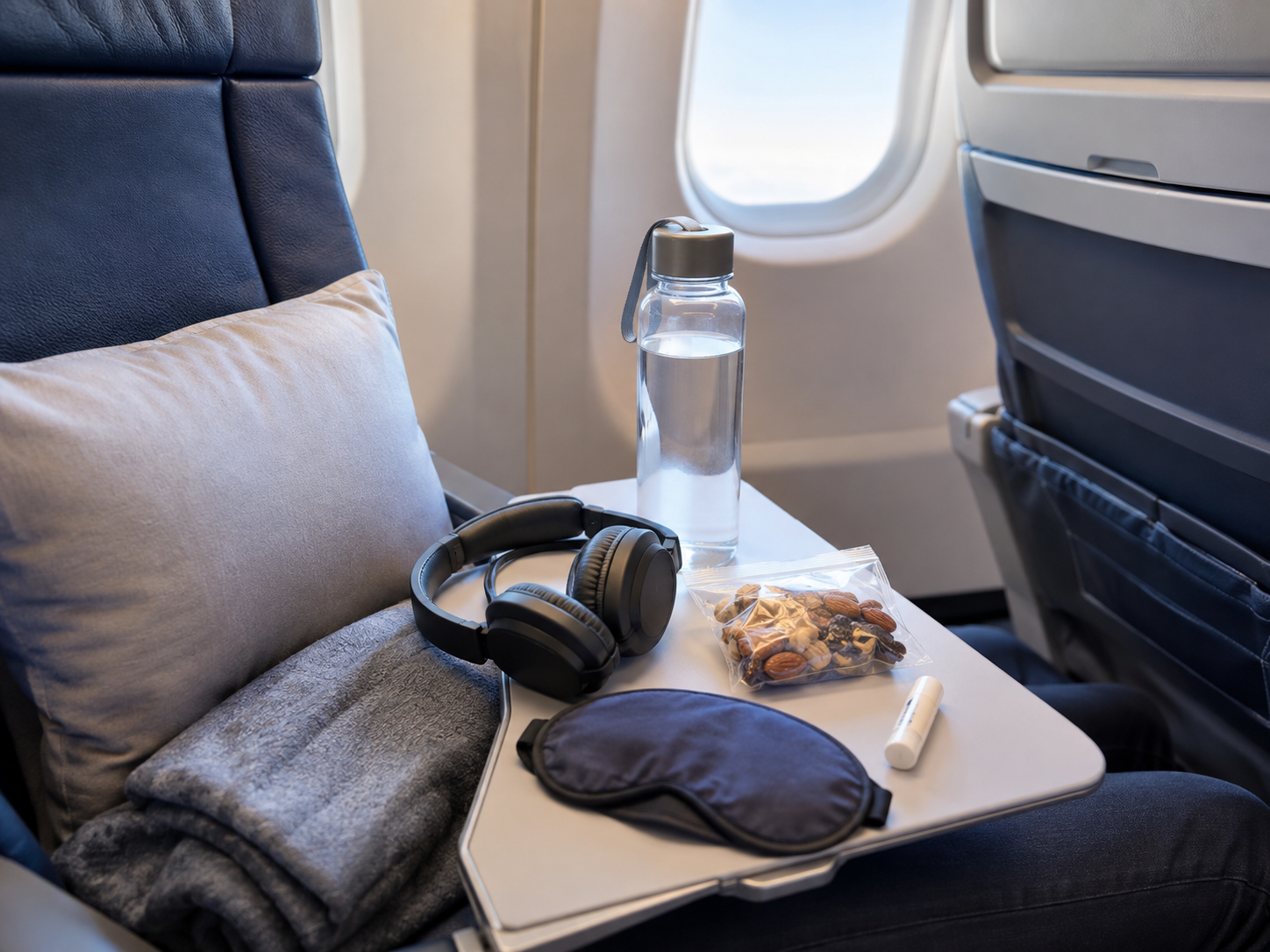
Carry-on organization: Pack your personal item so essentials sit at the top-mini pillow, noise cancelling headphones, chargers, lip balm, and hand sanitizer. Everything else goes deeper or into the overhead bin. If you're unsure how to keep your bag slim, Journey Fanatics' guide on how many outfits to pack for a 7-day vacation can help you avoid stuffing half your closet into a backpack.
Pack an empty reusable water bottle to fill after security so you can stay hydrated throughout the flight without relying on tiny cabin cups.
Dial In Your Airplane Seat Setup as Soon as You Sit Down
The first five to ten minutes after boarding are your best window to optimize your plane seat before the cabin gets crowded.
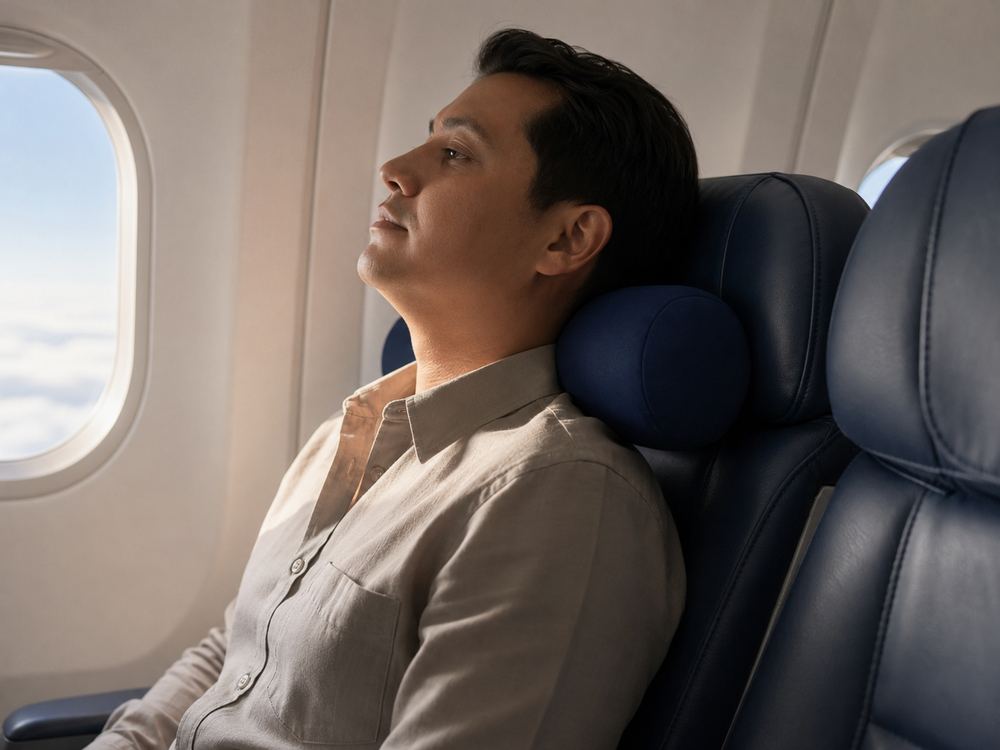
Headrest: Adjust your seat's headrest for better neck support. Slide it up or down so the curved wings sit behind the back of your head, then bend the wings inward toward your cheeks. Adjustable headrests provide extra neck support on flights and reduce the side-to-side wobble that wrecks any chance of rest.
Recline: On long flights, a slight recline opens the hip angle and eases lower-back pressure. Wait until after meal service, recline gently, and come back up slowly. Too steep an angle can strain your knees or the person behind you.
Armrests: If you're in the middle seat, claim at least one full armrest early with polite body language. On the aisle side, use the armrest to shift body weight off one hip periodically.
Seat-back pocket: Keep only a few items within reach-phone, headphones, a mini pillow, a snack, a pen, and a small water bottle. This prevents constant twisting to rummage in a bag under the seat.
Feet and legs: Stow heavier bags fully under the seat in front or overhead so your feet can rest flat on the floor. Choosing the right seat can impact your comfort during a flight-extra legroom rows give you more room, but even in a standard row, small ankle circles and heel lifts help keep blood moving without bothering neighbors.
Boost Comfort with Compact Pillows and Smart Support
You don't need huge memory foam gear to improve an airplane seat. Strategically placed small pillows and a thin cushion can be a game changer.
Neck support: A compact travel pillow works best when positioned slightly behind the head rather than jammed under the chin, keeping the neck in a neutral position. Inflatable travel pillows improve neck support on flights and pack down small, though they offer less shape flexibility than foam or microbead options.
Lumbar support: A small lumbar pillow can help support the natural curve of your lower back. Even rolling up a light jacket fills the gap between your spine and the seat, reducing the muscle effort needed to sit upright. This one adjustment alone can turn a punishing red-eye into something bearable.
Tailbone relief: A memory foam cushion relieves coccyx pressure on flights. Even as little as 1.5 inches of cushion can improve spine alignment in airplane seats-just choose a low-profile design so your knees don't hit the tray table. Using an inflatable seat cushion can add cushioning to hard airplane seats when you need extra padding without extra bulk.
The Travel Fanatics Mini Microbead Pillow: This compact microbead pillow lets travelers tuck it behind the neck, lower back, shoulder, wrist, or between the ribcage and armrest without crowding their carry on. It's flexible enough to brace the side of your head against a window seat wall, cushion a middle seat armrest edge, or support a forearm while reading on a tablet.
Move, Stretch, and Switch Positions on Long Flights
Staying perfectly still is what makes long flights miserable. Small, frequent adjustments beat one dramatic stretch session every time.
Simple rhythm: Every 30–45 minutes, shift your hips a few inches, switch which leg is slightly forward, or adjust the angle of your lumbar pillow. Adjusting your posture regularly can help maintain comfort during long flights far more than finding one "perfect" position and freezing there.
In-seat stretches: Stretching mid-flight can alleviate shoulder and neck pain. Try gentle neck tilts side to side, shoulder rolls, sliding your shoulder blades down toward the seat cushion, and straightening one leg at a time under the seat to stretch the back of the knee. A leg hammock can support your lower back during flights by letting you elevate your feet slightly-pack a leg hammock if you have the space.
Aisle walks: Getting up and walking around can improve circulation during long flights. Every two to three hours when the seatbelt sign is off, walk to the galley and back or stand briefly near the lavatory. Frequent stretching and walking during a flight can improve circulation and reduce stiffness-just listen to flight attendants and stay out of the way.
Position cycling: Alternate between upright for eating and using a laptop, slightly reclined with pillow support for reading, and more reclined with head and side support when trying to sleep. These small changes matter more than seat selection on international red-eyes, especially if you're stuck in the middle seat for hours.
Stay Comfortable Through Delays, Meal Service, and Middle-Seat Moments
Delays on the tarmac, long boarding lines, and tight meal-service windows can undo your comfort setup unless you have a simple plan.
Boarding delays: Keep your mini pillow, water, and snacks in your personal item-not the overhead bin-so you can support your back or neck even if you're sitting on the runway for 45 minutes before takeoff.
Meal service: Bring your seat more upright, clear your lap, and reposition any cushion so you can reach the tray table without hunching forward. Staying hydrated can improve comfort and reduce fatigue on flights, so sip water consistently rather than chugging a huge bottle at once. Avoiding alcohol and excessive caffeine can help maintain hydration during flights too.
Middle seat survival: Negotiate armrest sharing early with a friendly tone, use a compact pillow between your ribcage and the armrest to soften hard edges, and angle your legs slightly so you're not colliding with neighbors' knees.
Snacks and entertainment: Include snacks like mixed nuts or protein bars for energy-Journey Fanatics has a solid list of airplane snack ideas that won't bloat or dehydrate you. For the mental side of comfort, try a quiet airplane travel game for families or an offline reading app so boredom doesn't magnify the physical discomfort.
Small Extras That Make a Big Difference in Economy Comfort
No single item transforms economy into first class or business class, but a few small accessories together make your airplane seat feel incredibly comfortable by comparison.
- Sound control: Pack noise-cancelling headphones for a quieter flight. Reducing the constant engine roar and cabin chatter helps you relax and feel less frazzled in a cramped plane seat.
- Eye masks and layers: A lightweight eye mask and a soft scarf or cardigan can double as a blanket or extra seat cushion on overnight flights.
- Hydration kit: A refillable water bottle filled after the airport security checkpoint, plus basic skincare items, keeps your face, hands, and lips from feeling tight after hours in recirculated air. Bring a memory foam cushion for added seat comfort if you have room in your bag.
- Comfort pouch: Pack a small clear pouch with a mini toothbrush, lip balm, nasal spray, face wipes, and clip the Travel Fanatics Mini Microbead Pillow to the outside of your backpack for easy access at landing.
For travelers who want more neck support than a mini pillow alone provides, Journey Fanatics' guide to the best airplane pillow for international flights compares different styles side by side.
Frequently Asked Questions About Making Airplane Seats More Comfortable
Travelers often have practical questions about economy comfort, especially on long flights. Here are a few that didn't fit neatly into earlier sections.
What is the most comfortable seat on a plane if I'm flying economy?
It depends on your priorities. Snag a window seat to avoid aisle bumps and to lean against the wall for sleep. Aisle seats are better for frequent bathroom breaks and stretching. Bulkhead or exit-row seats often provide more legroom but less under-seat storage. If you're a light sleeper, a window seat away from galleys and lavatories is usually the best bet on long flights.
How can I make a middle seat more bearable on a long flight?
Claim at least one armrest early with polite body language, use a compact pillow for side and lower-back support, and keep your personal item small enough to leave foot room beneath the seat. Pre-download movies or podcasts and set up a routine of stretches and small movements so the limited space feels less overwhelming.
Should I bring my own seat cushion on the plane?
A thin, portable seat cushion can help on long flights, particularly for sensitive tailbones. Use a memory foam cushion to relieve coccyx pressure, or try products like the Jet Seat cushion, which helps maintain better spine alignment. Just choose low-profile designs that don't raise you so high your knees hit the tray table. If baggage space is tight, a rolled-up sweater combined with a mini pillow for lumbar support is an effective lightweight alternative.
How early should I start moving around on a long flight?
Start within the first hour. It's easier to stay comfortable if you begin gentle movement early-changing positions and doing small stretches-instead of waiting until pain sets in. Take short aisle walks whenever the seatbelt sign is off, respecting flight attendants' instructions and avoiding crowding the galley. Compression socks can reduce blood clot risk on long flights, so combine them with movement for the best results.
Do I really need noise cancelling headphones to be comfortable?
They aren't mandatory, but they can significantly reduce fatigue from background noise, especially on overnight or very long flights where the engine hum grinds you down over hours. Quality earplugs are a space-saving alternative for passengers who prefer to keep their carry on as light as possible.
Conclusion: Build Your Own Comfort Routine for Every Flight
Making an airplane seat more comfortable is about a repeatable routine: smart clothing, a well-organized carry on, compact support like a mini microbead pillow, and small movement habits during the flight. You can't control legroom, but you can absolutely control how you position your neck, back, arms, and sides-even in a tight row or a dreaded middle seat.
Try a few of these ideas on your next flight. Set a timer to change positions, clip a small pillow to your backpack, and pack snacks that actually help. Then refine what works for your body on future trips. Every vacation, every landing, every hour in the air gets a little more dialed-in when you treat comfort as a skill, not luck.
Happy Travels! 🌍