
Winter Travel Packing Tips: What Travel Taught Me About Packing Less — and Smarter
What winter travel taught me about packing less and smarter—from cold weather mistakes to the essentials I’ll never skip again on winter trips.

Winter travel has a way of humbling you.
You can research cold weather packing lists, scroll through winter travel essentials, and still end up standing in a hotel room wondering why your suitcase feels impossibly full — yet somehow missing the things you actually need.
After several winter trips, including a cold-weather road trip with an overnight stay at Fairfield Inn Gallup, I finally realized something important:
Packing more doesn’t make winter travel easier.
Packing smarter does.
This is what winter travel taught me about packing less, staying warm, and building a winter packing system that actually works.
Disclosure: Journey Fanatics earns from purchases, no extra cost to you!
Cold Weather Travel Is a Different Game

Cold weather travel isn’t just “summer packing plus a coat.”
Winter trips bring: explore top travel ideas for winter
- Bulky winter clothes
- Snow gear and insulated boots
- Inclement weather and icy winds
- Changing conditions throughout the day
Between cold temperatures outside and overheated indoor spaces, winter travel requires layers, flexibility, and intention.
On this trip, I overpacked — again — and that’s what finally made the lesson stick.
What I Overpacked (And Didn’t Need)
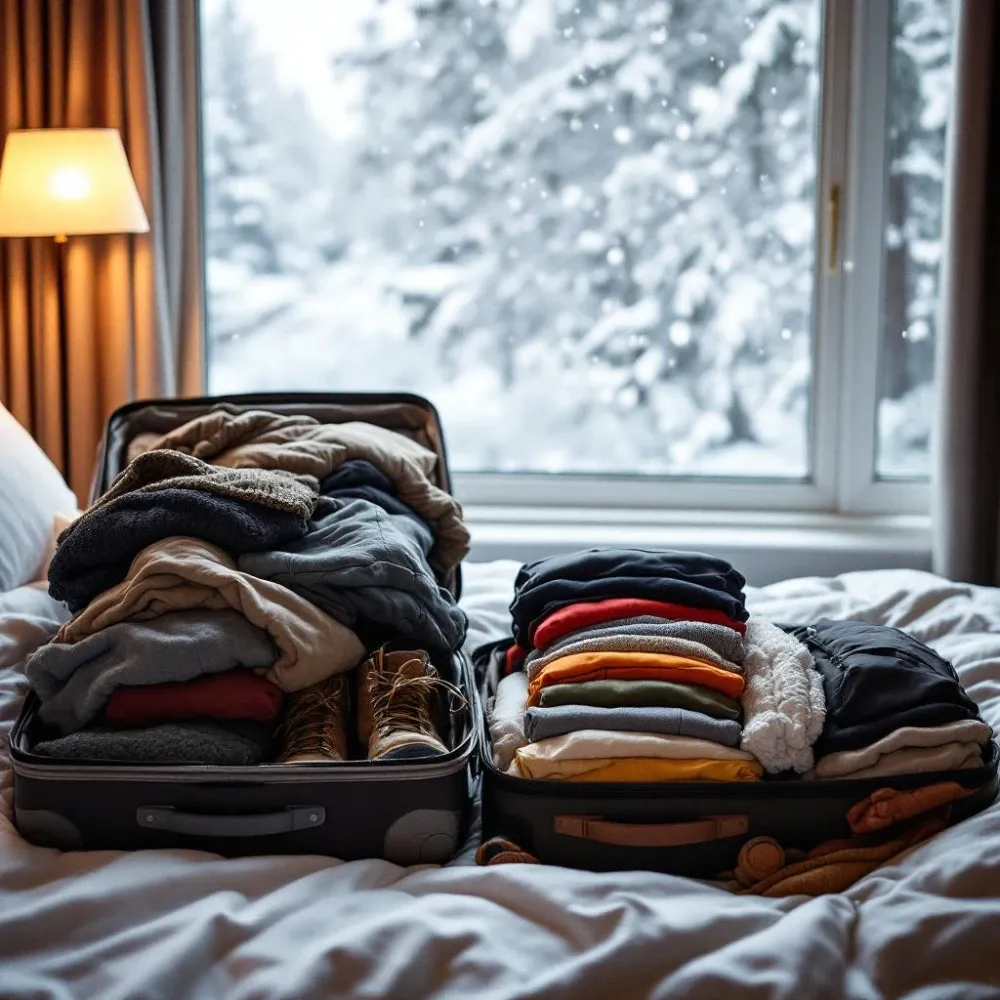
Like many winter travelers, I packed for every possible scenario:
- Extra winter boots “just in case”
- Too many sweaters
- Ski pants even though we weren’t doing winter sports (Why did I buy winter sports gear?)
- Multiple bulky outer layers
- Extra shirts that never left the suitcase
I told myself it was smart preparation.
In reality, it just took up much space and made my carry on harder to manage.
Most of those bulky items stayed untouched — while the things I did use were the same few layers over and over.
That’s when I realized: winter packing is about rotation, not volume.
What I Actually Used (Every Single Day)
Here’s what got constant use on this winter trip:
Base Layers & Temperature-Regulating Fabrics
Merino wool became non-negotiable.
- Merino wool long sleeve shirt
- Merino wool sweater
- Merino wool leggings / long underwear
These pieces regulate body heat, don’t hold odor, and work across cold weather destinations without needing constant washing.
A good first layer makes all the difference — especially when layering clothes is the only way to stay warm without overheating.
Warm Socks That Actually Work
I packed fewer socks, but better ones:
- Wool socks
- Thermal socks for colder mornings
Keeping feet warm mattered more than any other comfort item. Cold feet ruin everything.
One Good Pair of Winter Boots
Instead of multiple shoes, I relied on:
- One sturdy pair of insulated boots
- Waterproof shoes with good traction
Choosing boots wisely saved space and covered snowy conditions, wet sidewalks, and long walks without needing backups.
Outer Layers That Layer Well
Rather than one massive winter coat, I relied on:
- A mid layer
- A water resistant outer layer
- A long coat for colder evenings
Layering outer layers worked better than one heavy Canada Goose-style jacket that took up half the suitcase.
The Packing Shift That Changed Everything On This Cold Weather Trip
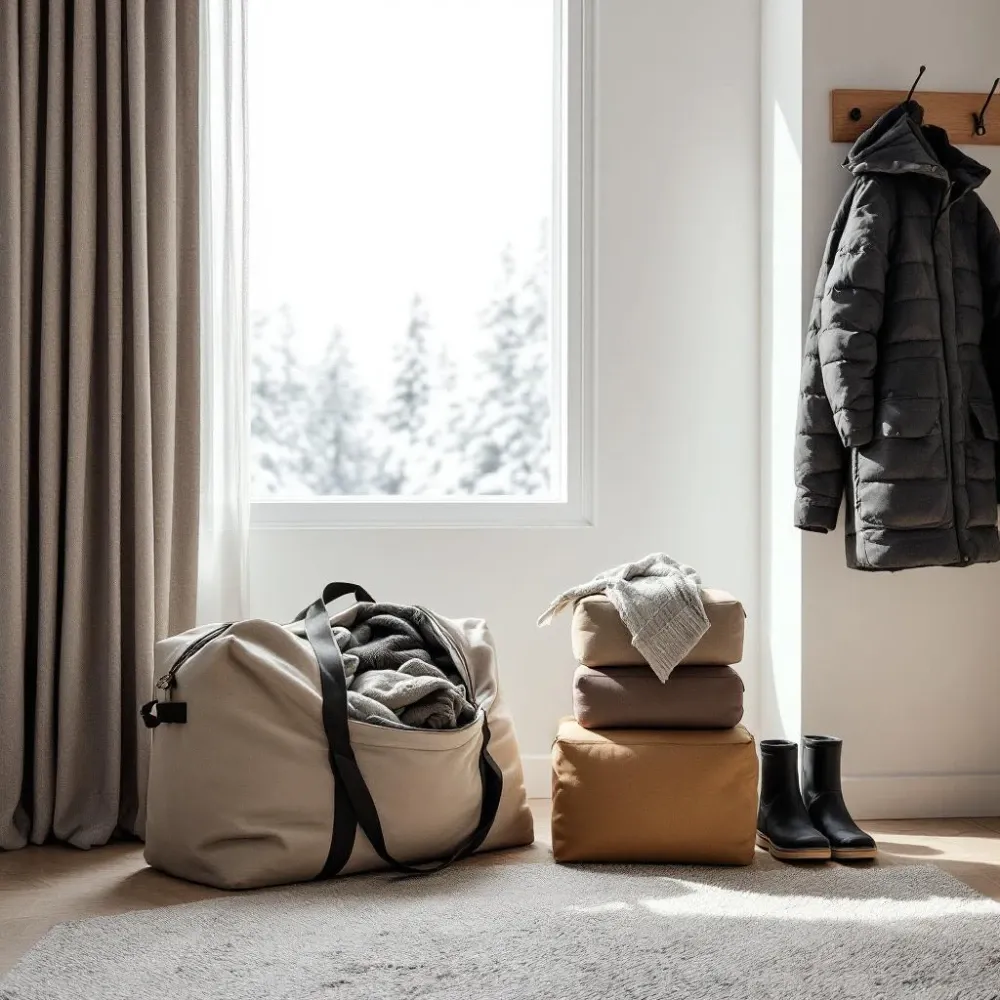
The biggest lesson wasn’t what I packed — it was how I handled clothes once they were worn.
Winter clothes are heavier.
They hold moisture.
They don’t fold neatly once worn.
At Fairfield Inn Gallup, I noticed how quickly clean clothes and worn clothes blurred together. Without a system, everything felt messy — fast.
That’s where a dedicated laundry bag changed the entire experience.
Instead of:
- Stuffing worn clothes into packing cubes
- Letting bulky items pile up
- Mixing snow gear with clean layers
I kept all worn clothes separate from the start.
This saved room, reduced stress, and made repacking effortless — especially important on a cold weather trip where laundry facilities aren’t always accessible.
Why Packing Cubes Aren’t Enough for Bulky Items
Packing cubes are great for:
- Clean clothes
- Organizing base layers
- Building outfits
But winter gear is different:
- Bulky items don’t compress well
- Damp clothes need airflow
- Snow gear shouldn’t mix with clean layers
Using packing cubes and a laundry bag created a system:
- Packing cubes = clean clothes
- Laundry bag = worn or damp winter items
That separation alone helped me pack light for winter without sacrificing comfort.
What I’d Never Skip Again
After this winter trip, these are my non-negotiables:
- Merino wool base layers
- Warm socks (feet warm = trip saved)
- One insulated, waterproof boot
- Versatile layers instead of bulky items
- A laundry bag for worn clothes
- Packing intentionally, not emotionally
I’d also pack hand warmers for outdoor activities and snowy conditions — small item, big impact.
The Real Goal: Pack Light, Stay Warm, Carry On
Winter travel packing tips aren’t about minimalism for the sake of it.
They’re about:
- Saving space
- Staying warm
- Adjusting to cold weather travel without stress
- Making room for what actually matters
Packing light for winter doesn’t mean freezing or sacrificing comfort. It means choosing items that work together, layer well, and earn their place in your bag.
Final Thought: Smarter Packing Changes the Trip
Winter trips are quieter. Slower. More intentional.
Packing smarter — not more — lets you enjoy that rhythm instead of fighting your suitcase every night.
This trip reminded me that a solid winter packing list isn’t about having everything — it’s about having the right things, organized in a way that works for cold weather travel.
And honestly?
That made all the difference.
Happy Travels! 🌍
Raquel