
How to Do Laundry in an RV (Without Letting It Take Over Your Tiny Home)
Learn effective tips for doing laundry in an RV, from space-saving solutions to efficient washing techniques. Read the guide to simplify your RV life!

RV life is fantastic until you realize your limited space is slowly disappearing under a pile of dirty clothes. Between the tiny bathroom, moisture from the shower, and unpredictable access to laundry facilities, figuring out how to do laundry in an RV can feel weirdly complicated. Whether you're rolling in a travel trailer, a motorhome, or a fifth wheel, the challenges are basically the same: not enough room, not enough water, and towels that never seem to dry.
This guide covers everything from campground laundry rooms and commercial laundromats to rv washers, washer dryer combo units, portable washer options, and even hand washing in buckets. You'll also learn how often to wash, where to stash dirty clothes, how to dry towels without turning your rig into a sauna, and how to keep clutter from taking over. Doing laundry in an RV requires managing limited water, power, and space - but with a simple system, it's completely manageable.
Step One: Set Up a Smart Dirty-Laundry System
The biggest mistake new RVers make is letting worn clothes pile up on the dinette, the bed, or worse, the shower floor. Within two days your small space feels chaotic and starts smelling like a gym bag.
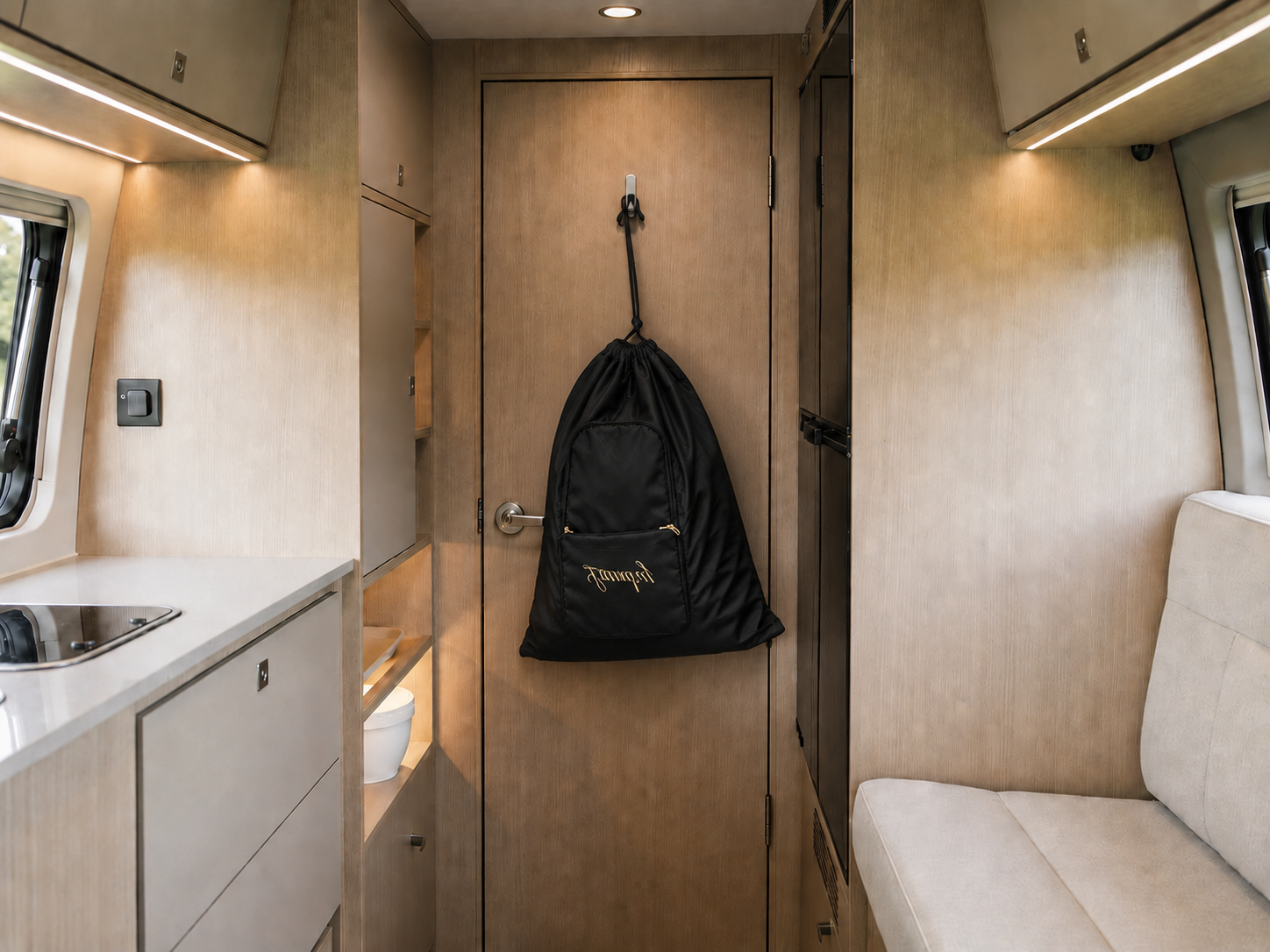
The fix is dead simple: give dirty clothes one designated home. The Travel Fanatics Laundry Bag is a great option - it opens to about 22 × 21 inches (plenty of room for a few days' worth of laundry), then folds down to roughly 6 × 6 inches when empty. It's lightweight nylon with a zipper plus drawstring, so nothing spills when you carry it to laundry facilities or toss it in the truck. It's reusable, durable, and a huge upgrade from stuffing things into plastic grocery bags.
Where to keep it depends on your rig:
- Hanging from a hook in the bathroom
- Under the bed in a fifth wheel
- In a cabinet near the entry door
- At the foot of a bunk in a family rig
If you're traveling with kids, consider a separate bag for swim gear and sandy clothes so sorting on laundry day takes seconds instead of 20 minutes. Flip worn items inside out before tossing them in - they wash better and stains are easier to spot later. A quick evening sweep for socks, towels, and swimsuits keeps things from drifting around the RV overnight. Many of the same separation tricks that work in a suitcase apply perfectly in an RV too.
How Often Should You Do Laundry in an RV?
Most RV travelers land on a dedicated laundry day every five to seven days. Families with kids or heavy outdoor activities - think sandy beaches, muddy trails near national parks, daily swims - often need to wash every three to four days.
Your trip style matters. A couple on a two-week road trip staying at full hookups campgrounds might do two loads total. A family of four spending three weeks at a lakeside campground with daily swims will burn through more clothes and towels fast.
Think of it this way: count the outfits you packed, multiply by people, and compare to your access to facilities. If you packed smart - check out how many outfits to pack for a 7-day vacation for a solid starting framework - you can stretch a week between washes easily. Best practices for rv laundry include using high-efficiency detergent and packing light so you're not drowning in more clothes than you need. Schedule laundry around travel days and weather: washing clothes can involve hand-washing small items on boondocking days and utilizing laundromats when you're near town. Avoid starting a load right before a moving day or when rain will kill your ability to air dry anything outside.
Campground Laundry Rooms vs. Laundromats
These are your two main "no-equipment-needed" options for laundry on the road, and each has trade-offs worth knowing.
Campground laundry rooms are the convenience play - most RV campgrounds have laundry facilities available for campers, sometimes just steps from your site. Many state parks also provide laundry facilities, though the machines tend to be older and smaller. Using campground facilities can be more convenient than laundromats, but the cleanliness of campground laundry machines can vary significantly, and campground laundry facilities can charge steep rates for washing. They also often have limited hours of operation, so plan ahead. Tips for making it work: avoid peak evening and weekend times, set alarms so you don't tie up machines, wipe the washer rim before loading, and always bring your own laundry soap and dryer sheets. Laundry costs at campgrounds can be higher than at laundromats - typically $2–$5 per wash and similar for a dry cycle.
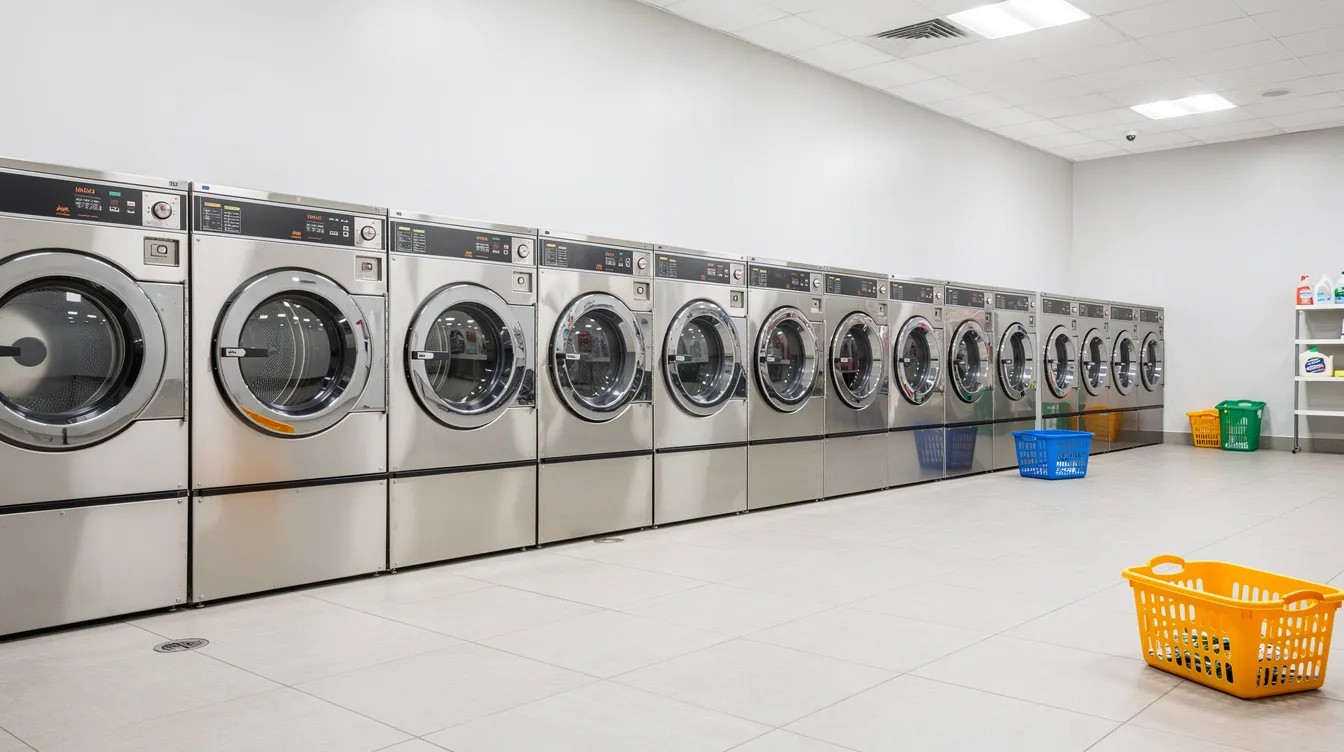
Laundromats shine for bigger jobs. Utilizing laundromats saves water and can be more efficient for larger loads because their machines handle blankets, jeans, and bedding that won't fit in a small campground unit. You can run multiple loads in parallel and finish a week's worth in about one to one and a half hours. Larger laundromat machines can save money by fitting multiple loads into one load. Laundry costs for RVers can range from $10 to $25 per laundry day depending on family size and location - and laundry costs can add up quickly while RVing full-time, so budget accordingly.
Before you go: use Google Maps to find nearby laundromats with reviews, check machines for cleanliness before use, and bring quarters as many laundromats are coin-operated (plus a backup card). Combine the stop with grocery shopping to save money on gas. Check for parking that fits your rig, choose well-lit locations, and don't leave loads sitting - basic laundromat etiquette keeps everyone happy.
RV Washers, Dryer Options, and Portable Setups
Many RVs offer built-in washer and dryer options for convenience, especially larger fifth wheel and Class A rigs with dryer hookups. If you travel often or full-time, having a washer dryer in your rig can save money on campground laundry costs over time.
Stackable washer and dryer sets offer the most capacity and work great for families. They function like home machines but require storage space, weight capacity awareness, and typically 50-amp service. Many RVs require 50-amp service for washer dryer units, so verify your electrical setup before buying.
Washer dryer combo units squeeze everything into one drum, which is ideal for a small space. RV washer dryer combos are often vented or non-vented. Vented models dry more effectively but need an exterior vent. Some RV washer dryer units are ventless, increasing moisture risk inside the rig. The trade-off: combo units take longer to dry clothes than standard dryers, and the load capacity is smaller. But a washer dryer combo works great when room is truly limited. Avoid overloading washing machines - whether combo or standalone - to ensure clothes are cleaned properly.
Portable washers are the budget-friendly middle ground. Portable washing machines are useful for small loads like underwear, gym clothes, or kids' outfits. Portable washers typically cost between $200 and $300, and portable washers can fit in your RV shower when not in use. They need a method to drain and rinse water (gravity hose or a bucket), and they won't handle heavy blankets, but for a small amount of daily laundry they're solid. Boondocking travelers with limited power should note that a portable washer draws far less than a full unit - usually 300–600 watts.
Drying Clothes and Towels in a Tiny RV Space
Washing is only half the battle. Getting things truly dry in a small, often humid room is the real challenge.
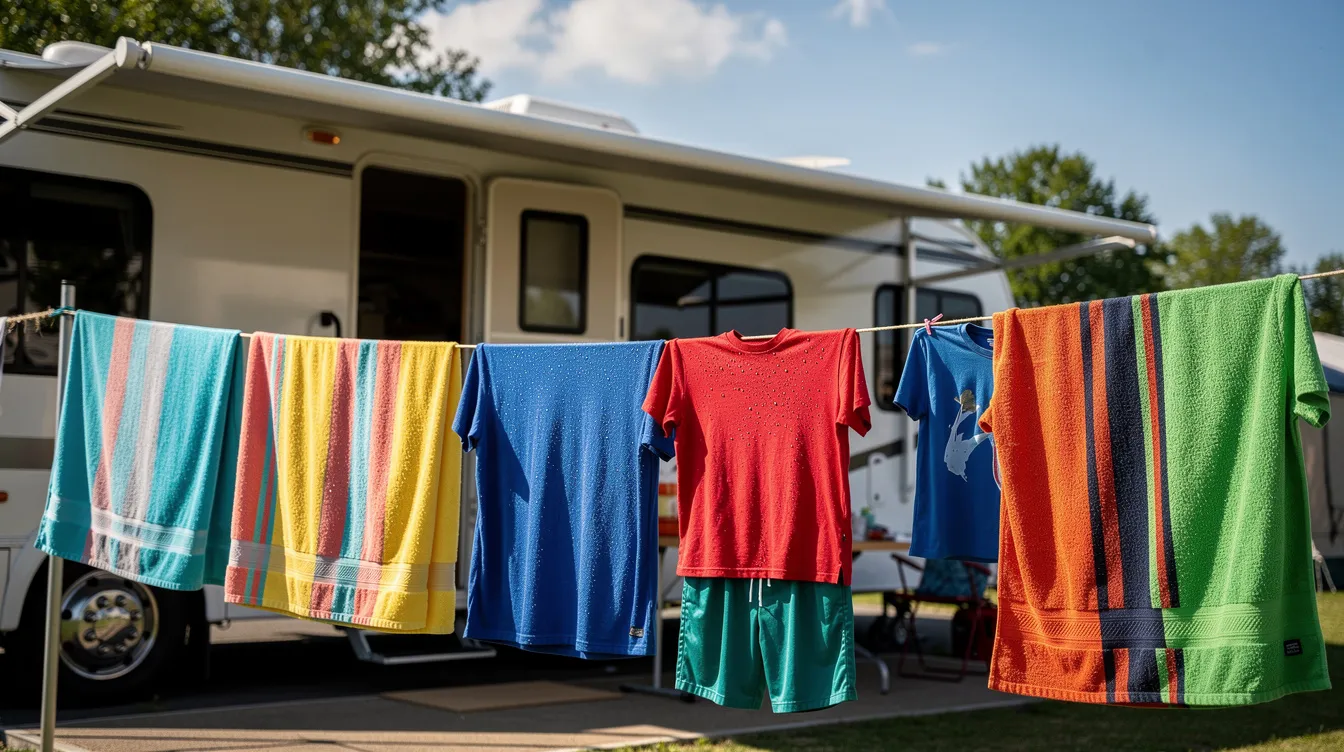
Use campground or laundromat dryers for big loads whenever possible. For everything else, air dry strategies are your best friend. Use a foldable drying rack to save space - they collapse flat and tuck behind a door or under a bed. Clip hangers handle socks and underwear, and a short clothesline under the awning on sunny days works beautifully for towels.
Sort laundry by drying speed rather than color for better efficiency. Separating bulky items like towels from lighter laundry speeds up drying time significantly. Sort laundry by fabric type to streamline drying time - quick-dry microfiber towels (300–400 GSM) can dry in one to four hours, while thick cotton terry may take a full day. When packing towels for RV life, choose lower-GSM or waffle-weave options to hang dry faster.
Wet beach or pool towels? Hang them immediately when you return to the campsite instead of tossing them in a pile. That single habit prevents mildew and odors. If you air dry clothes indoors often, a dehumidifier can help speed up drying clothes in an RV. Open windows, run roof vent fans, and keep airflow moving. Check campground rules before hanging lines outside - some parks restrict clotheslines near shared spaces.
Packing and Organizing Clothing to Reduce Laundry Stress
Smart packing is the secret weapon against RV laundry chaos. Fewer, more versatile outfits mean less to wash, less to fold, and less to trip over. Build a simple capsule wardrobe for each traveler: a few neutral bottoms, layering pieces, and a couple of fun items rather than a whole closet. The Journey Fanatics road trip packing list is a great starting point for right-sizing what you bring.
Dedicate a small drawer, soft bin, or packing cube per person so clean clothes always have a home. Label them if you're traveling with kids - color-coded bags or cubes and a specific lower cabinet per child keep things from migrating onto beds and benches. Using laundry detergent sheets instead of liquid bottles saves space in an RV and eliminates spill risk.
Keep "wear again" items - jeans you wore for a few hours, a hoodie - on a specific hook or shelf so they don't end up back with fresh laundry or contaminate your dirty clothes bag. RV trips with lots of outdoor activities call for extra socks and underwear but fewer "nice" outfits, which naturally reduces laundry volume and gives you more space in your rig.
RV Laundry Routine Tips, Costs, and Time-Savers
A repeatable routine keeps laundry from becoming a production. Here's the method that works: collect, sort, wash, dry, fold, and immediately put away. That last step matters - if you don't fold and stash everything right when you return to the RV, clean clothes will fill every surface in your limited space.
Realistic timing: a campground laundry room session runs about 1.5 to 3 hours depending on machine availability and how many loads you're running. A laundromat visit with multiple loads going simultaneously can take one to one and a half hours. Hand washing is practical for small laundry needs while traveling - handwashing clothes can be done using two buckets, some elbow grease, and a rinse with clean water, then hanging items on a rack.
Cost-saving tips:
- Bring your own detergent instead of buying overpriced single-use packets
- Use larger machines for combined loads to save money
- Time big washes before reaching expensive tourist-area stops
- Pre-sort into light and dark bags in the RV so you're not waiting around sorting at the laundry mat
For overall road trip comfort, don't forget the little things that make long driving days between campground stops more bearable - like a steering wheel cover for summer heat. The more comfortable the journey, the less laundry stress feels like a big deal.
Frequently Asked Questions About Laundry on the Road
Do I really need an RV washer or washer dryer combo? Not necessarily. Weekend and seasonal travelers can get by with campground facilities and laundromats. Full-timers or large families often find that a washer and dryer in the rig pays for itself over months of avoided laundromat costs.
What about laundry when boondocking with no hookups? Hand wash small items in two buckets with a small amount of soap, rinse thoroughly, and hang dry on a compact rack or line. Save bigger loads for your next stop with facilities.
How many outfits should I pack for a multi-week RV trip? Five to seven days' worth of mix-and-match clothing per person is a solid target. Favor quick-dry and multipurpose pieces, and plan on washing weekly.
How do I deal with wet swimsuits and towels? Hang them immediately - don't let them sit in a pile. Good airflow from open windows or vent fans prevents mildew and keeps your rig smelling fresh.
What's the best way to store dirty clothes between washes? A dedicated laundry bag like the Travel Fanatics Laundry Bag keeps odors contained and dirty items separated from clean clothes in your storage areas.
Build a Simple RV Laundry System and Enjoy the Trip
You don't need a massive washer and dryer or a huge wardrobe - just a straightforward system for storing, washing, and drying clothes on the road. Pick the right combination of campground laundry rooms, laundromats, or in-rig machines, pair it with a good dirty-laundry setup, and you'll spend way less time and money stressing about laundry than you'd expect.
Tools like the Travel Fanatics Laundry Bag and thoughtful packing turn laundry day into a quick errand instead of a trip-ruining chore. Experiment with frequency, routines, and methods until you find the rhythm that fits your rig, your budget, and your travel style.
The open road is way more fun when you're not buried in dirty socks.
Happy travels! 🚐